Sequential Trip-Planning Curriculum

Learn to plan the trip before you book it

Travellers rarely ruin holidays because they picked the wrong hotel. They ruin them by making commitments out of order: buying cheap flights into remote secondary airports, ignoring seasonal transit timetables, and realizing too late that local accommodation consumes triple the transport savings. We teach deliberate, step-by-step travel planning.

01
Stage 01 — Constraint Definition

01 Set the boundaries — travel goals, dates and constraints

Every resilient travel plan begins with honest constraints rather than inspirational social media imagery. The primary risk at this initial phase is committing to a vague window of time without calculating daylight hours, bank holiday closures, or personal pace limitations.

Before browsing flight aggregators, write down four non-negotiable anchors: exact date buffers, strict total monetary limits, physical transit tolerance (e.g., maximum travel hours per day), and the true intention of the holiday (active exploration versus restorative quiet).

The Order Rule: If an attractive airfare demands a departure time that forces an expensive taxi at 3:30 AM or burns an entire working day in transit recovery, the saving is illusory. Bound your energy before your wallet.

02
Stage 02 — Destination Feasibility

02 Research beyond the postcard — destination research lessons

Destination research is not about bookmarking scenic cafes; it is about uncovering operational friction. A hillside Tuscan town looks romantic on postcards until you discover that local regional buses terminate at 16:30 on weekends, leaving you stranded if you have not hired a vehicle.

Our method breaks research into micro-audits: assessing topographical walkability, identifying off-peak museum hours, and evaluating public transport frequency between central districts and peripheral rail hubs.

Deep shadow cobblestone street in an old European quarter at dusk with warm lantern glow Audit Technique
Module 2.1

The 15-Minute Urban Perimeter

How to cross-reference grocery access, tram links, and neighborhood noise patterns before signing accommodation contracts.

Methodology Read brief →
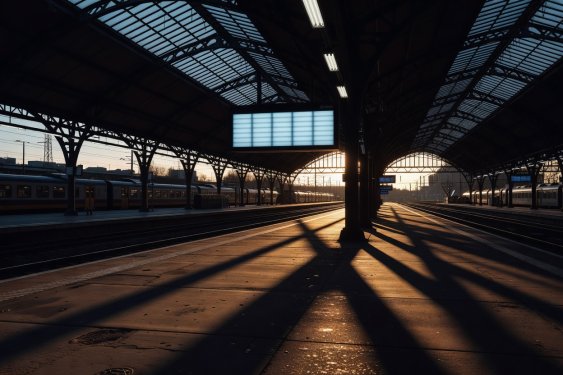
Railway terminal platform with moody high-contrast lighting and departure board Timetable Realism
Module 2.2

Intercity Transit Reality Checks

Evaluating national rail operators like SNCF, Trenitalia, and Deutsche Bahn during seasonal maintenance schedules.

Field Research Read brief →
Guiding Principle

Travel budgets fail when they only tally the journey

A holiday ledger must capture city tourist taxes, luggage surcharges, airport rail shuttles, and mid-afternoon recovery coffees. When you account for the quiet leakages in advance, you remove holiday financial friction entirely.

03
Stage 03 — Expenditure Modeling

03 Give the holiday a spending plan — complete budgeting

Standard budgeting advice relies on arbitrary daily figures like €80 or €120. In practice, costs are uneven. Days with intercity train movements or museum multi-passes spike expenses, while rest days cost modest amounts.

We divide your holiday capital into five explicit ledger categories: Fixed Transport, Bed & Base, Incidentals & City Taxes, Daily Food Rhythm, and the Unforeseen Buffer.

Ledger Category Typical Allocation Common Hidden Drain Mitigation Habit
Fixed Transit 25% - 30% Seat reservation surcharges & luggage tiers Calculate door-to-door cost, not runway-to-runway
Accommodation 35% - 40% Per-night municipal tourist taxes (€3-€10/person) Verify if tourist fees require cash on arrival
Local Daily Sustenance 20% - 25% Sit-down service charges (coperto) & bottled water Eat primary meals at lunch menus of the day
Contingency Buffer 10% Late-night replacement taxis and missed connections Ring-fence as unallocated funds until final day

Explore complete budgeting frameworks

04
Stage 04 — Transit Comparison

04 Compare the journey properly — flight strategies

A headline fare of €29 is an invitation to spend €90 on ground logistics. Low-cost carriers routinely operate from airports located 60 to 110 kilometers away from central metropolitan areas (e.g., Beauvais for Paris, Hahn for Frankfurt, or Sandefjord Torp for Oslo).

A rational comparison requires computing the effective terminal-to-pillow cost: factoring in shuttle bus tickets, lost daytime hours, and the risk of early-morning missed departures.

High-contrast shot of an airport or station corridor with dramatic morning shadows Deconstruction
Module 4.1

The Secondary Airport Penalty

How to quantify the true cost of outlying air terminals before you celebrate a cheap one-way booking.

Routing Strategy Read case study →
Minimalist compact European accommodation room with luggage and structured morning light Ancillary Analysis
Module 4.2

Baggage Tier Geometry

Navigating personal item dimensional restrictions on carriers like Ryanair, Wizz Air, and easyJet.

Packing Systems Read case study →
05
Stage 05 — Itinerary Architecture

05 Join the days together — itinerary creation

Amateur itineraries read like shopping lists of monuments: 9:00 Louvre, 11:30 Notre Dame, 13:00 Montmartre, 15:30 Eiffel Tower. This recipe guarantees physical exhaustion and resentment.

We teach geographic clustering and anchor scheduling. By designating one primary morning anchor and letting the afternoon breathe with clustered geographical wanderings, you build resilience against delays, rainstorms, and unexpected fatigue.

Study the itinerary structuring method

06
Stage 06 — Applied Field Case

06 Test a European escape — affordable and seasonal examples

To prove that our sequential planning works, we evaluate real European getaways across distinct seasons: shoulder-season Portugal (Porto and the Minho line), late-autumn Central Europe (Vienna to Brno), and early spring in the Peloponnese.

In each case, we observe how shifting travel by just two weeks outside peak summer drops lodging rates by up to 45% while preserving comfortable weather and eliminating hour-long queues.

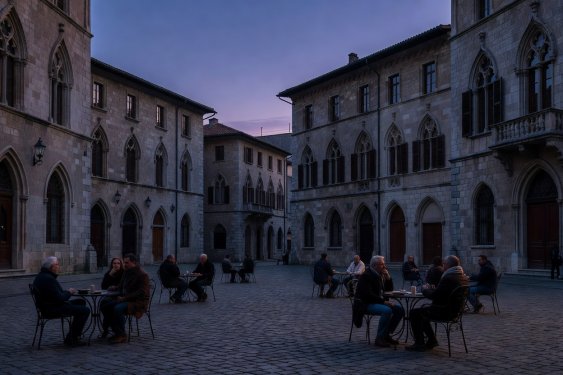
Evening atmosphere in a stone European public square with quiet patrons and deep architectural shadows Case Study
Field Example

Shoulder Season in Northern Portugal

Leveraging urban train lines between Porto, Guimarães, and Braga on a realistic €75 daily ceiling.

October Case Read breakdown →
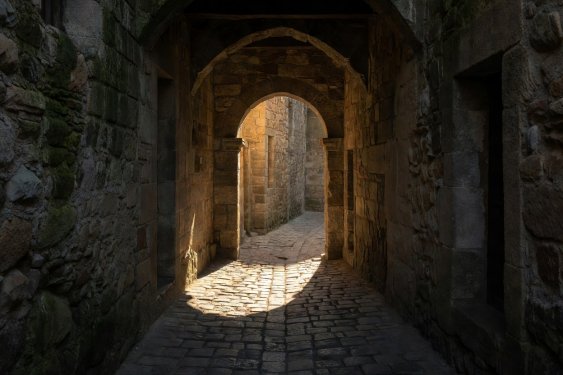
Narrow medieval stone passage with high contrast sunlight and deep natural shade Regional Value
Field Example

The Moravian Cross-Border Route

Pairing Vienna arrival hubs with low-cost, high-amenity regional stays in the South Moravian corridor.

November Case Read breakdown →
07
Stage 07 — Self-Assessment

07 Check your planning judgement — FAQ preview and lesson sources

Are you confident that your current travel plan will survive real-world strain? Review our self-assessment prompts before making non-refundable deposits:

Can you execute your arrival transfer without high-cost private transit?
If your flight arrives at 23:25 and the last rail connection terminates at 23:30, your €35 flight demands an €85 late-night taxi. Verify airport night buses or select daytime arrivals.
Have you verified regional public holidays and seasonal closing weeks?
Many continental European towns close family-run dining and regional museums throughout mid-August or early November. Check local municipal event calendars.
Is your day-to-day transit time under three total hours?
Spending five hours per day navigating transfers, waiting on regional platforms, and repacking bags leaves no mental space to absorb the culture. Prioritize fewer base camps.

Read all planning FAQs Use the lesson inquiry worksheet