Itineraries: Turn Stops into Sensible Days
The most common symptom of poor planning is “vacation exhaustion”: returning from a trip more drained than when you left. A sensible itinerary does not pack every hour; it orchestrates rhythm, movement, and recovery.
The One-Anchor Principle
When you inspect the notes of an inexperienced trip planner, you see four or five rigid reservations spaced 90 minutes apart across opposite sides of a metropolis. Any delay — a missed metro transfer, a delayed lunch service, or a museum queue — produces a domino effect of panic and ruined tickets.
Our rule is simple: One Primary Anchor Per Day.
A primary anchor is a non-negotiable timed reservation: an advance slot at the Vatican Museums, an architectural tour of Villa Tugendhat, or an evening performance. Everything else in that day is structured around that anchor within a single walkable geographical cluster.
- Morning (09:00 - 12:30): The High-Cognitive Block (The Primary Anchor when mind and legs are fresh).
- Midday (12:30 - 15:30): Sustenance and Pause (A sit-down local meal away from heavy tourist zones, followed by unstructured neighborhood strolling).
- Late Afternoon / Evening (15:30 - 21:00): Ambient Exploration (Parks, river paths, public squares, or regional rail return).
Case Study: Northern Portugal Rail-Based Itinerary
To demonstrate how this functions over a real 6-day period, examine our worked Northern Portugal model. Rather than changing hotels every evening across Porto, Guimarães, and Braga, the traveler maintains a single hotel base near Porto São Bento station.
| Day | Primary Anchor (Morning) | Geographic Cluster | Transit Requirement |
|---|---|---|---|
| Day 01 | São Bento azulejo study & Clerigos perimeter | Porto Central (Cedofeita / Baixa) | On foot exclusively |
| Day 02 | Serralves Contemporary Art Foundation & Park | Lordelo do Ouro / Foz do Douro | Bus 201 or 502 from center |
| Day 03 | Guimarães Medieval Castle & Ducal Palace | Guimarães Historic Quarter | Urban train from São Bento (1h 10m, €3.45) |
| Day 04 | Port wine lodge archives & Gaia waterfront | Vila Nova de Gaia (South bank) | Walk across Dom Luís I lower deck |
| Day 05 | Bom Jesus do Monte Sanctuary & Historic Center | Braga Old Town | Regional train from São Bento (1h 05m, €3.45) |
| Day 06 | Bolhão Market pantry stocking & rest buffer | Santa Catarina / Bonfim | On foot exclusively |
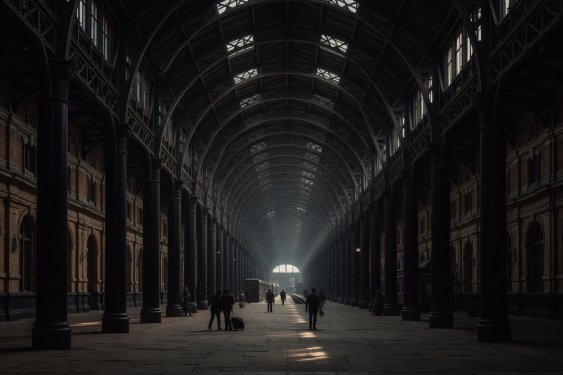 Hub & Spoke
The Hub-and-Spoke System
Eliminate daily packing and checking in by establishing one central rail-connected base for multiple day excursions.
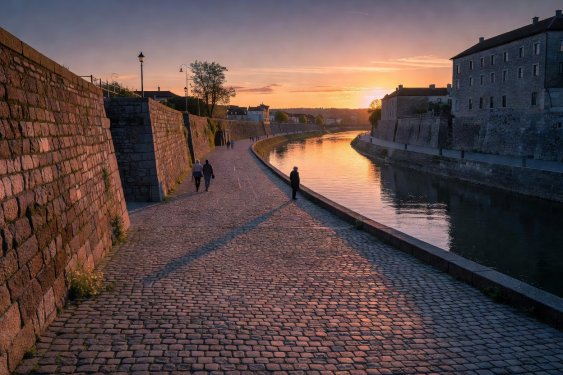 Recovery Logic
The Golden Recovery Buffer
Why scheduling one completely unplanned half-day every 72 hours rescues trips from burnout.
The Danger of the “Empty Half-Hour”
Many novice planners believe that having a 30-minute gap between monument appointments provides plenty of leeway. In practice, 30 minutes in a foreign city is barely sufficient to locate a public facility, navigate a ticket scanning barrier, or clear security.
Always build 60-minute transition buffers between major activities. If you finish earlier, that hour becomes an unscripted opportunity to enjoy a side-street espresso, inspect a quiet bookshop, or sit in a public courtyard — the exact memories travelers cherish long after forgetting what was inside the museum glass cases.